

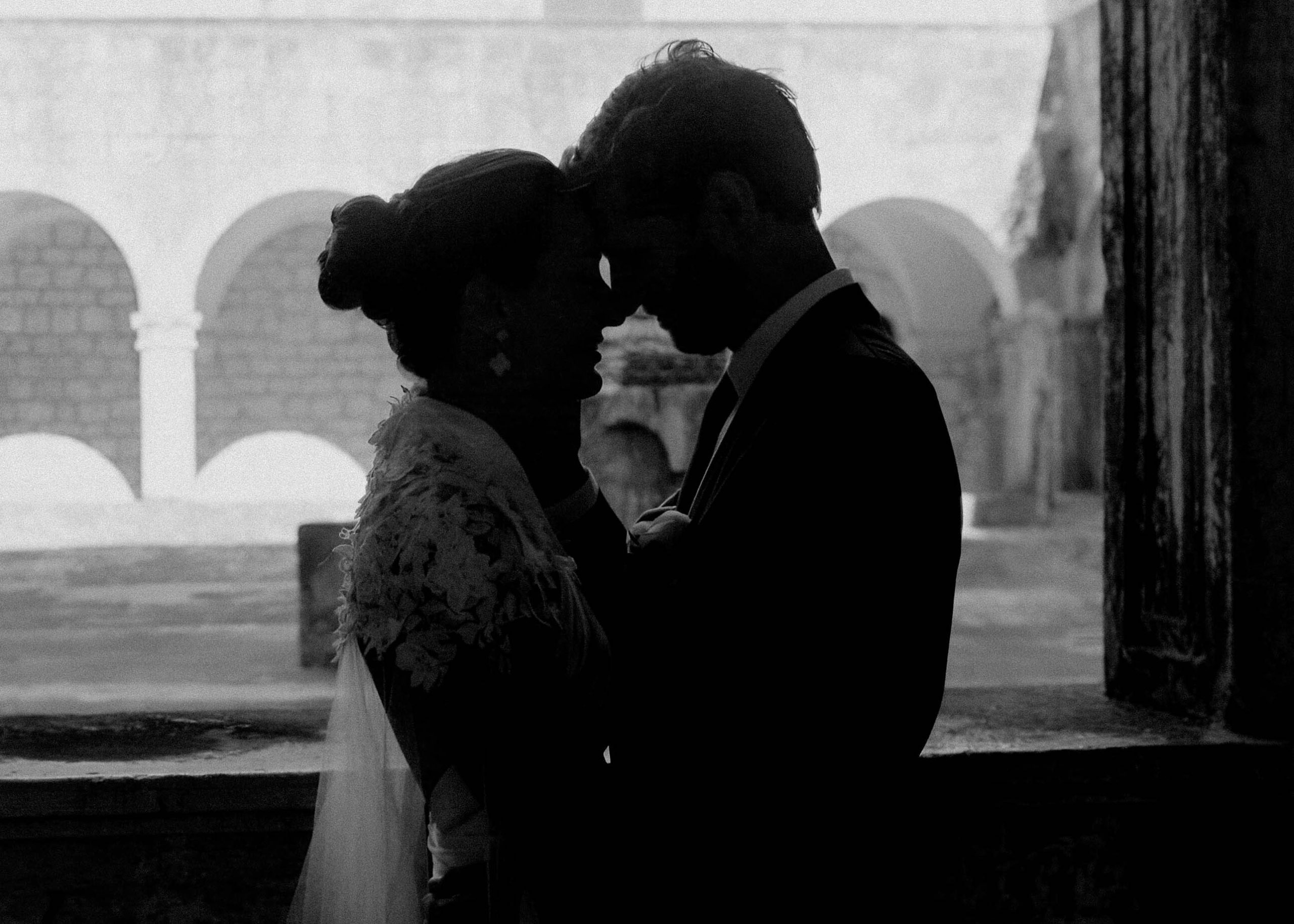
There is a version of wedding filmmaking that treats the couple as scenery. Beautiful, cooperative scenery, arranged and re-arranged until the light is right. I have never wanted to make films that way. The ones I am proudest of only exist because two people trusted me with something unfinished: a day they hadn’t lived yet, a version of themselves they hadn’t quite met. That trust doesn’t arrive on the wedding morning. It’s built, slowly, in every exchange that comes before it.
Choosing someone whose eye you actually want
Most couples start by watching reels. That’s fine, it should tell you something, but it shouldn’t tell you everything. A demo reel shows you technique. It rarely shows you temperament. What I’d look for instead: how does this person talk about weddings they’ve already shot? Do they remember the couple, or just the frames? Do their films all look like the same wedding wearing different outfits, or does each one feel like it belongs to the people in it?
Style match matters more than most people admit before they’ve hired someone. If you’re drawn to films that are quiet and unhurried, don’t hire someone whose instinct is loud. You’re not just buying a skill set. You’re choosing whose gaze will sit inside your memory of the day.
First contact: the inquiry that says more than it means to
Your first email or message to a videographer is, in its own small way, an act of trust. You’re describing a day that doesn’t exist yet to a stranger. I read those messages closely, not for logistics, but for tone. What are you excited about? What are you nervous about? Sometimes a couple tells me more in three sentences about their venue than they realize.
Don’t overthink this stage. You don’t need a polished pitch. Say what you know, ask what you’re unsure of, and let the exchange that follows tell you whether this is someone you want documenting your day.
The video call: a conversation, not a sales pitch
I treat this call as the actual beginning of the relationship, not a formality before a contract. We talk about the shape of the day, yes, timeline, family dynamics, the venue’s light at different hours. But mostly I’m trying to understand what you want to feel when you watch this film in ten years. Nostalgic and cinematic? Raw and unpolished? Somewhere in between?
This is also where I ask you to be honest about what makes you uncomfortable in front of a camera, because that discomfort is something I plan around, not something I ignore. A good call ends with both sides a little more relaxed than they started. If it doesn’t, that’s useful information too.
Prepping for the day: less checklist, more context
Timelines and shot lists have their place, but the details that actually shape a film are softer than that. Who is the person in your family whose reaction you’d want captured without them noticing? Is there a song, an object, a small ritual that matters more than it looks like it should? I don’t need a script. I need context, so I know where to be looking when something real happens.
Practical logistics still matter, and I’ll ask for them: getting-ready locations, ceremony structure, anything with tight timing. But the best preparation isn’t a spreadsheet. It’s a conversation that leaves me understanding your day the way you understand it.
Collaboration on the day itself
By the time the day arrives, my job is mostly to disappear. The couples who end up with the most honest films are the ones who stop performing for the lens somewhere around the second hour and just live inside their own wedding. I can’t manufacture that. I can only create the conditions for it, by staying quiet, staying close, and trusting you to forget I’m there.
If I ask you to pause, or walk somewhere twice, it’s brief and it’s rare. The rest of the day belongs to you. My presence should feel like weather, not direction.
After the wedding: patience, and the long exhale of editing
A wedding film isn’t assembled the week after the wedding, not one worth watching twice. I sit with the footage. I let the day settle before I decide what its story actually is. This part asks something of you too: patience, and trust that the version I’m building is being built carefully, not slowly for its own sake.
Where trust actually gets you
None of this works as a checklist. It works because somewhere between that first email and the final delivered film, two strangers decided to trust each other with something irreplaceable. That trust is the actual material I work with. Everything else, the lens choices, the light, the timing, is just craft in service of it.
If any of this resonates with how you’re imagining your own day, you can see how it plays out in the films themselves: renebatista.com/weddings